

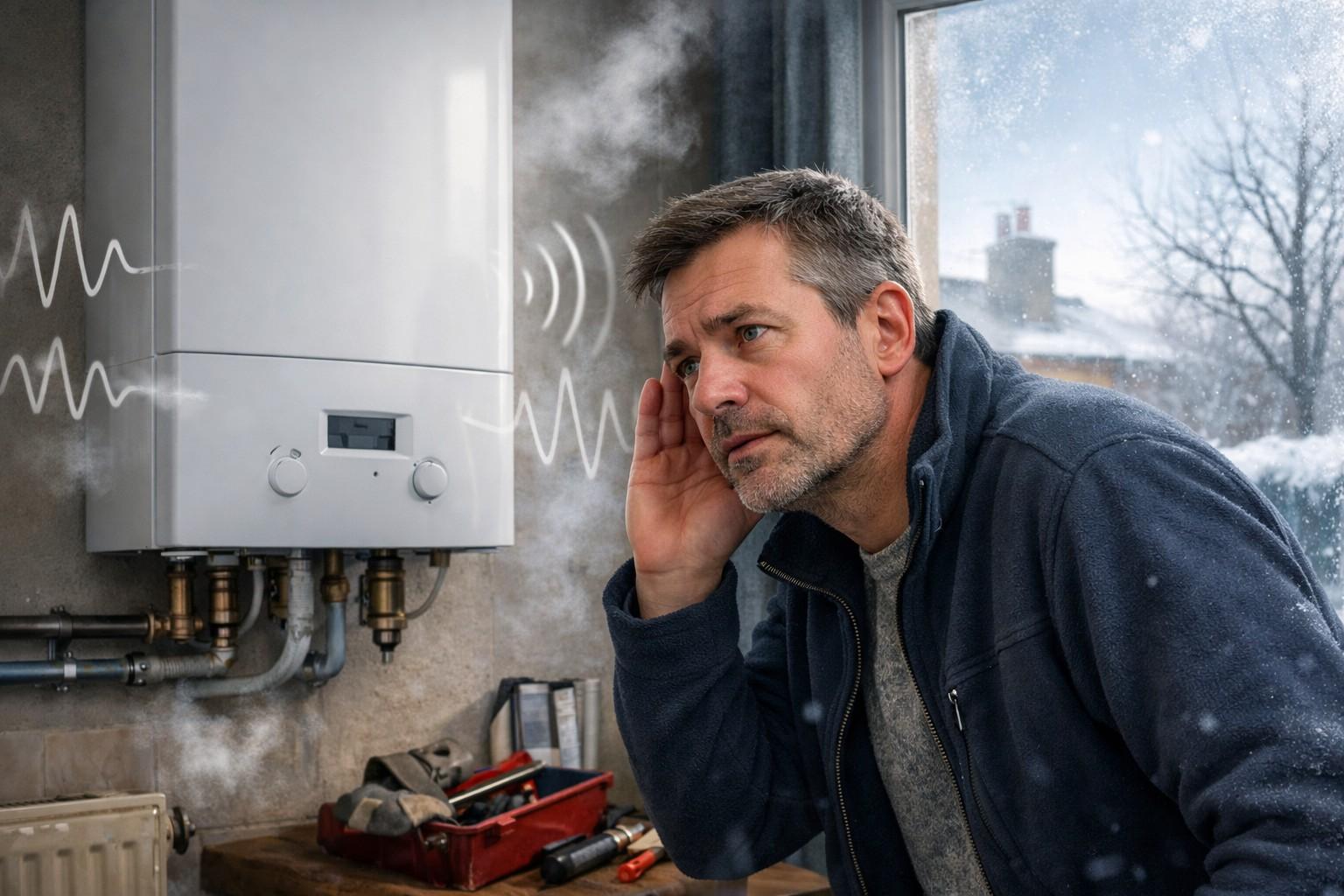
As winter approaches your boiler will become a crucial appliance within your home. The cold winter conditions can cause boilers to make weird and alarming noises. If you notice kettling, grumbling, banging or whistling sounds it’s a sure sign that something isn’t functioning exactly as it ought to. Recognizing these sounds early will save you from expensive repairs and unexpected malfunctions.
In this guide, we’ll explain the most common boiler noises, why they happen more often in cold weather, and when it’s time to call a professional especially if the boiler noise becomes louder or more frequent.
Why Do Boilers Make Strange Noises in Cold Weather?
The cold temperatures make your boiler more efficient in keeping the home cozy. When the demand is higher pressure fluctuations occur within the boiler, water flow is impeded and internal components expand and shrink. These circumstances often reveal problems that are often not noticed in warmer weather.
If you don’t pay attention to unusual noises and are ignored, it could result in decreased heating efficiency and higher energy costs or even a total boiler malfunction during the coldest winter days. winter.
What Is Kettling and Why Does It Happen?
Kettling is among the most frequently encountered winter boiler issues. It makes a sound like a boiling kettle and is usually caused by a heating exchanger.
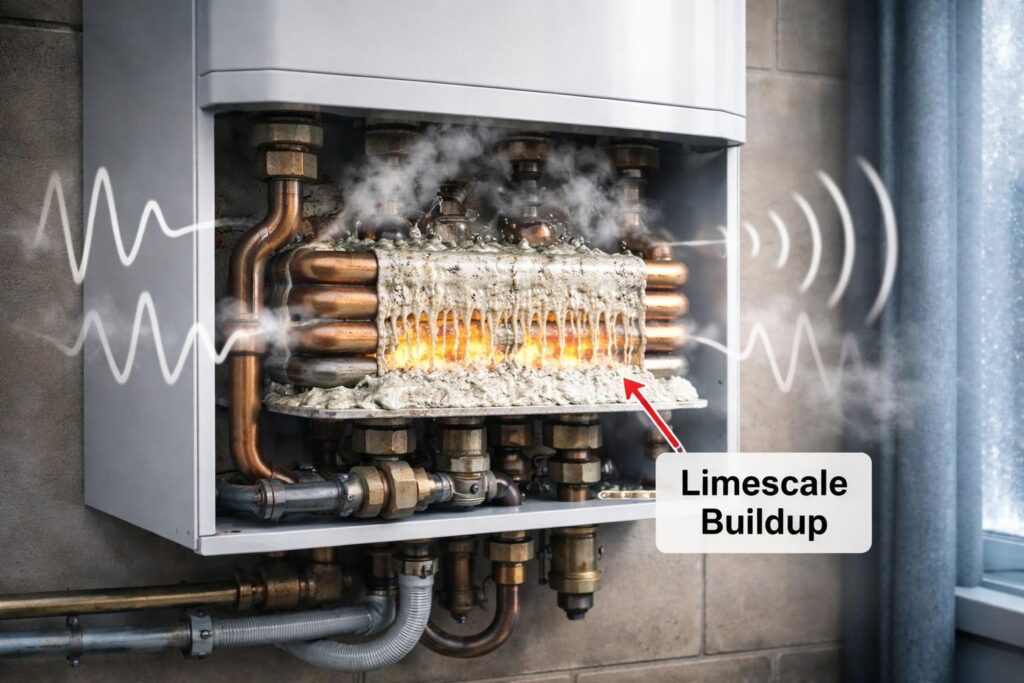
Common Causes of Kettling:
- Limescale buildup in the heat exchanger
- Water circulation is restricted
- Overheating as a result of insufficient heat transfer
In areas with hard water the limescale builds up quickly by trapping hot water and forming steam bubbles which create the sound of kettling.
Why Kettling Shouldn’t Be Ignored
If not treated, kettling could reduce the life of your boiler, and also reduce its efficiency. For older boilers, repeated kettling could indicate that it’s time to think about the possibility of a boiler installation and Replacement for a long-term guarantee of reliability and more quiet performance.
Banging or Knocking Noises: What Do They Mean?
The sound of knocking or banging can be alarming, especially if they occur in sudden, the colder months.
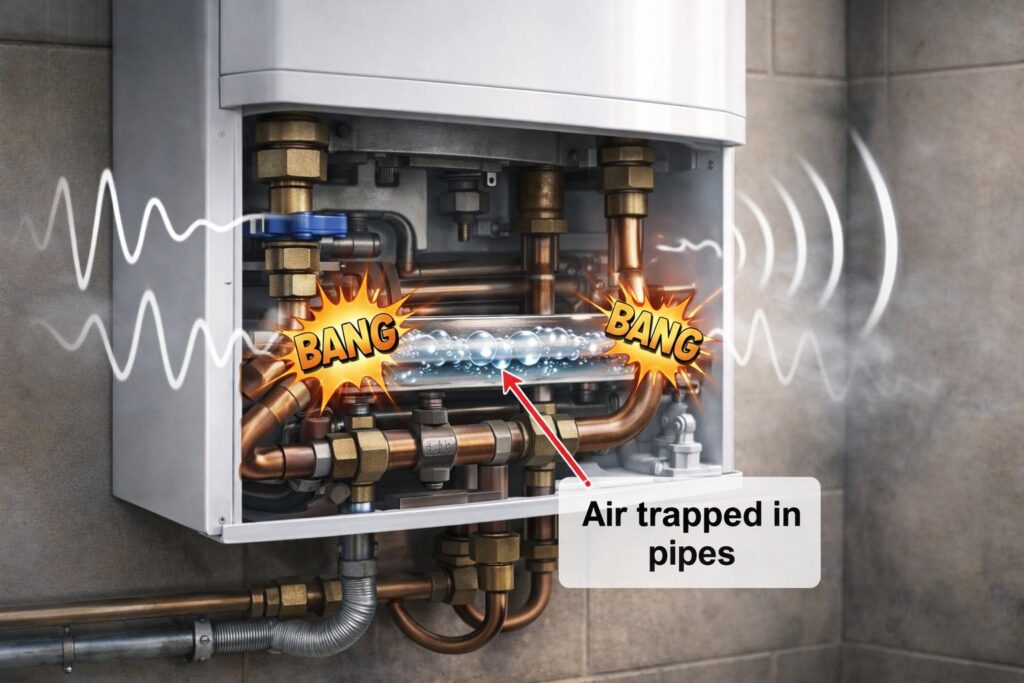
Possible Causes:
- Air that is trapped inside the heating system
- The boiler’s pressure can be fluctuating or low.
- Motor or pump that is not working properly
- Pipes expand and contract
Cold temperatures can cause more problems since metal components respond more strongly to temperature fluctuations. If the noises continue to be loud it could be a sign of an issue with the machine that needs an inspection by a professional.
Whistling Sounds Coming from Your Boiler
Whistling sounds usually are produced when air or water is pushed through narrow sections under high pressure.
Common Reasons for Whistling:
- Partially closed valves
- Pressure in the boiler is too high.
- Limescale limiting water flow
While whistling might seem like a minor issue at first, long-term pressure issues could lead to damages or leaks if they are not treated promptly.
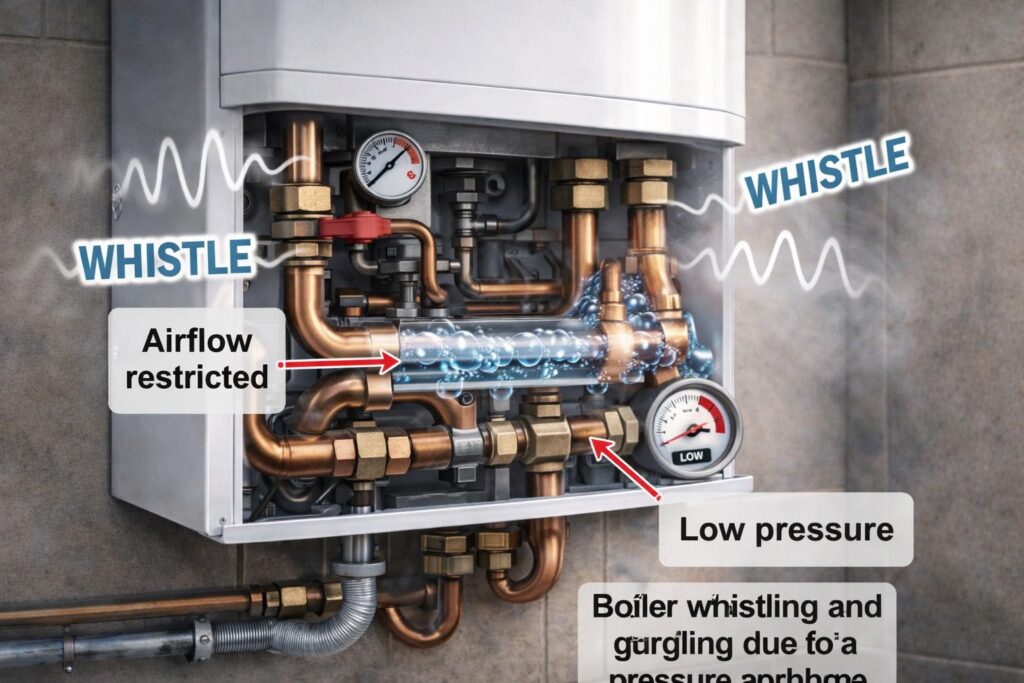
Gurgling or Bubbling Noises Explained
The sound of gurgling can indicate problems with drainage or trapped air in the drainage system.
Typical Causes Include:
- Airlocks are used in radiators, pipes, or pipework.
- Pressure in the system is low
- A condensate pipe that is frozen (very often seen in winter)
The process of bleeding your radiators can solve minor air problems However, if you continue to hear gurgling it is suggested to seek out a professional for diagnosis.
How Winter Weather Makes Boiler Problems Worse
In winter, boilers usually remain on for a long time with no break. This continuous operation could:
- More wear and tear
- Expose weak components
- Cause frozen external pipes
- This can lead to sudden drops in pressure
If your boiler was not maintained recently, the cold conditions can quickly turn an issue that was minor into a major breakdown.
When Should You Call a Boiler Engineer?
It is recommended to contact an expert in heating if:
- Boiler sounds become more loud or more frequent
- The boiler shuts off abruptly.
- Radiators heat unevenly
- Water pressure keeps dropping
- You can see that there are leaks around the boiler.
For situations that require immediate attention, such as in those instances when there is no heater or hot water, arranging an emergency boiler repairs will help prevent further damage and bring the warmth of your home in a short time.
How to Prevent Boiler Noises in Cold Weather
Maintenance on a regular basis is the most effective way to ensure that your boiler remains silent and effective throughout winter.
Prevention Tips:
- Schedule an annual boiler service
- Install the magnetic system to filter the air.
- Regularly clean radiators
- Monitor boiler pressure levels
- Insulate external pipes
These measures reduce the chance of breakdowns, and will help your boiler run smoothly through periods of cold weather.
FAQs: Boiler Noises in Winter
What is the reason my boiler make noise in cold temperatures?
The colder weather puts more pressure for the boiler, leading to pressure fluctuations as well as trapped air and limescale problems that can result in noise.
Is kettling noise dangerous?
The process isn’t necessarily dangerous, but it could cause damage to internal components if not taken care of.
Can I fix boiler noises myself?
Simple tasks such as flushing radiators can help, however loud noises that persist require expert repair.
Do noisy boilers always require replacement?
It’s not always the case. A lot of issues can be addressed However, older boilers could be better off with replacing them.
What should I do if I need to call an engineer for boiler emergencies?
If your boiler fails to operate or leaks, is unable to maintain pressure or makes loud noises that sound like banging You should contact an emergency engineer as soon as you can.
Final Thoughts
Boiler noises during cold temperatures should not be overlooked. If it’s a bang, kettling or whistling noises are usually the first signs of more serious issues. Being proactive can save you costs, boost efficiency as well as ensure that your home stays warm as temperatures fall.
If your boiler is making strange noises, a professional inspection and prompt repairs could be the key to a successful repair.